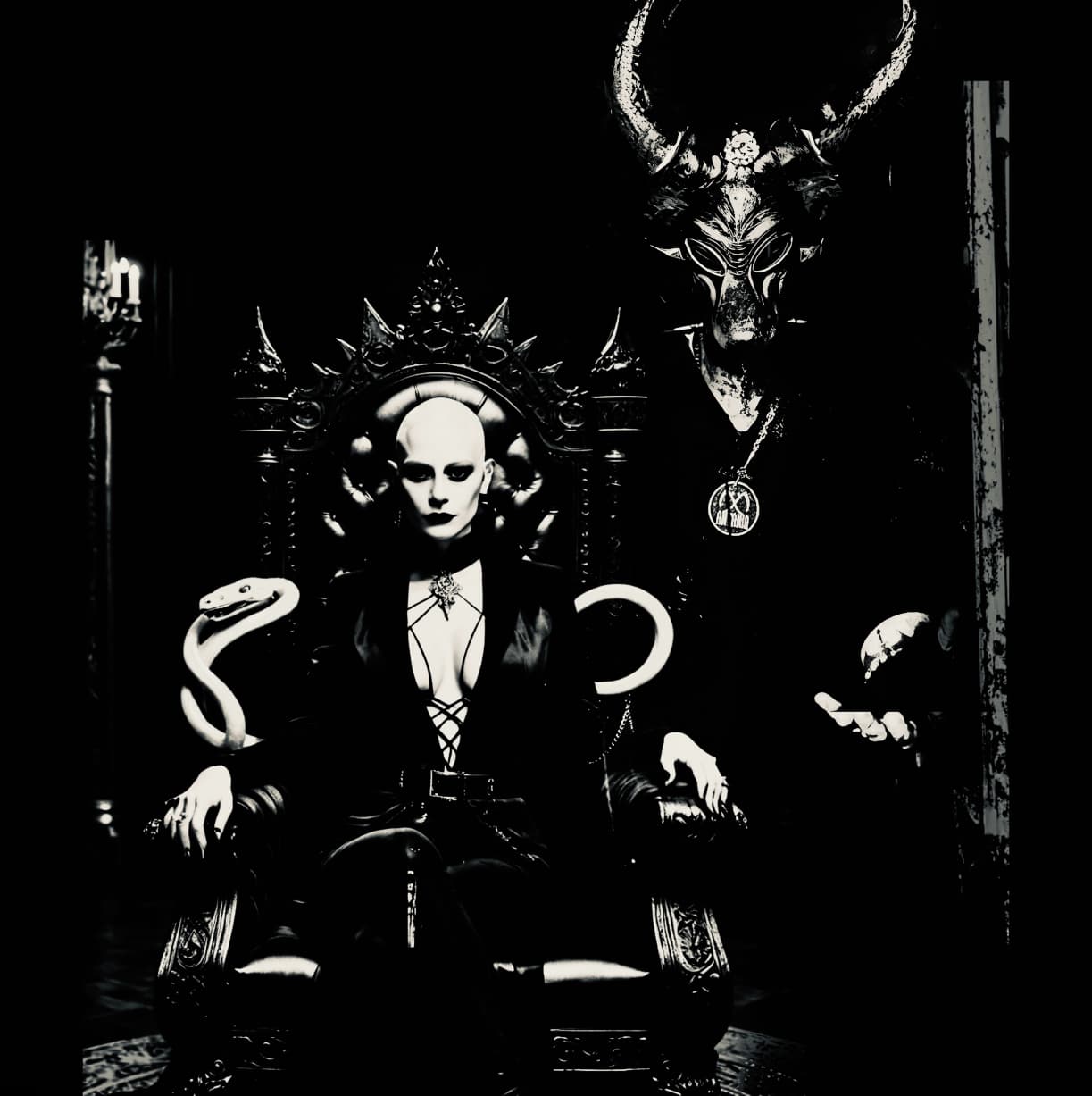

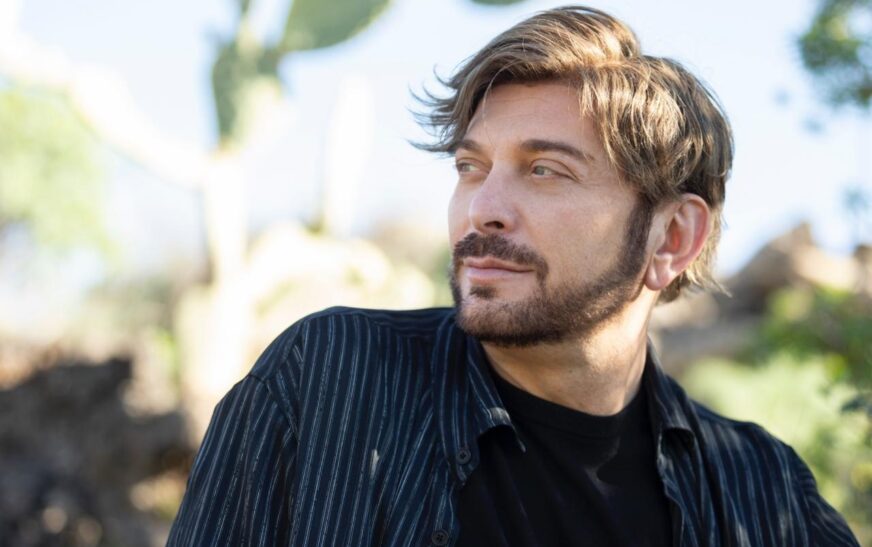
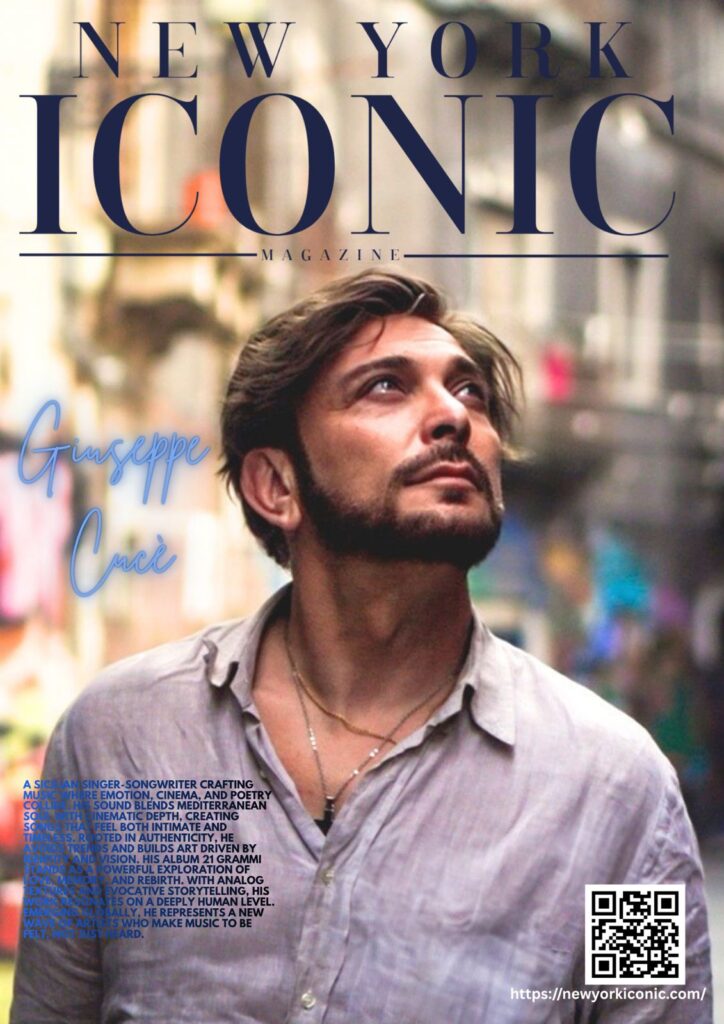
Giuseppe Cucè is an Italian singer-songwriter whose work lives at the intersection of music, cinema, and emotional storytelling. Rooted in the legacy of great European songwriting yet shaped by a modern artistic vision, Cucè has crafted a signature style defined by poetic lyricism, analog textures, and cinematic depth.
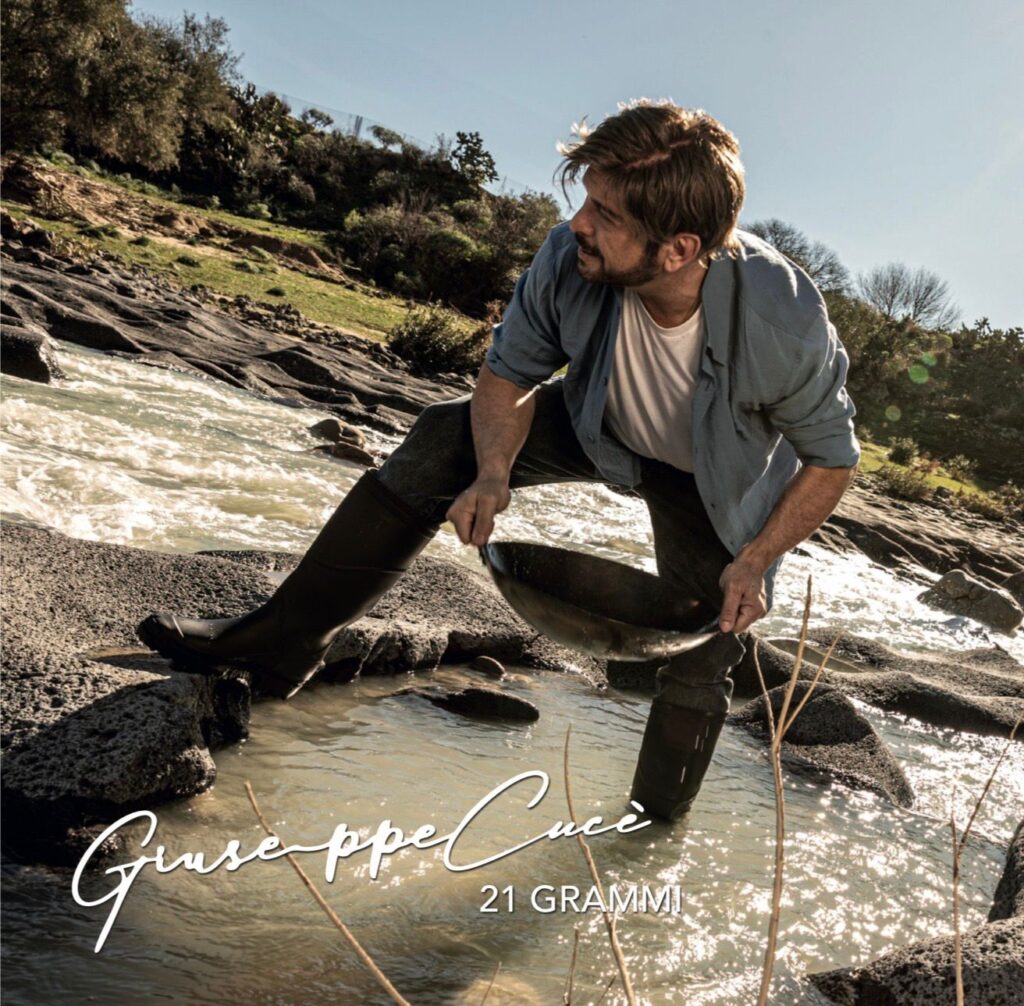
His acclaimed album 21 grammi stands as a powerful artistic statement, exploring themes of love, desire, fragility, and rebirth through an immersive and emotionally resonant soundscape. With growing international recognition, Cucè continues to establish himself as a distinctive voice in contemporary independent music.
Interview with Giuseppe Cucè
Q1: Your music feels deeply cinematic. How did this fusion between music and visual storytelling begin?
Giuseppe Cucè:
I’ve always perceived music as something visual. When I compose, I don’t just think in terms of melody or harmony—I imagine scenes, light, silence, movement. Cinema has influenced me deeply, not in a literal way, but in how it builds emotion. I try to create songs that unfold like sequences, where each sound has a role, almost like a character within a story.
Q2: You often avoid mainstream formulas. What drives your commitment to artistic authenticity?
Giuseppe Cucè:
For me, authenticity is not a strategy—it’s a necessity. I believe that music loses its power when it tries to imitate rather than express. I’m not interested in trends; I’m interested in truth. Every project I create has to reflect who I am at that moment, even if that means taking risks or going against expectations.
Q3: Let’s talk about 21 grammi. What does the concept of the “21 grams” represent to you?
Giuseppe Cucè:
The idea that the soul weighs twenty-one grams is symbolic, of course, but it fascinated me because it connects the physical and the spiritual. For me, the album is about what remains when everything else falls away—love, memory, desire, pain. It’s an exploration of the invisible weight we carry as human beings.
Q4: The album feels like a complete narrative rather than just a collection of songs. Was that intentional?
Giuseppe Cucè:
Absolutely. I never saw 21 grammi as separate tracks. It was conceived as a journey—each song is part of a larger emotional arc. I wanted listeners to experience it as something immersive, almost like watching a film from beginning to end.
Q5: Your sound blends analog textures with modern elements. Why is that balance important to you?
Giuseppe Cucè:
Analog sound has a soul—it breathes, it carries imperfections that make it human. At the same time, I live in the present, so I don’t reject modern tools. The balance comes naturally because I’m trying to create something timeless, not something tied to a specific era.
Q6: Critics have praised the emotional honesty in your music. How personal are your songs?
Giuseppe Cucè:
They are very personal, but not in a direct or literal way. I transform experiences into something more universal. I think the goal of art is not just to tell your story, but to allow others to see themselves within it.
Q7: As an independent artist gaining international recognition, what challenges have you faced?
Giuseppe Cucè:
The biggest challenge is maintaining your identity while expanding your reach. The industry often pushes artists toward simplification, but I believe complexity and depth are essential. Being independent gives me freedom, but it also requires discipline and clarity of vision.
Q8: Your work carries a strong Mediterranean essence. How does your Sicilian background influence your music?
Giuseppe Cucè:
Sicily is part of my emotional language. There’s a certain intensity, a connection to beauty and contradiction, that naturally enters my music. It’s not something I try to emphasize—it’s simply who I am.
Q9: What do you want listeners to feel when they experience your music?

Giuseppe Cucè:
I don’t want them to just listen—I want them to feel something real. Whether it’s nostalgia, desire, or introspection, what matters is that the music creates a connection. If a song stays with someone after it ends, then it has fulfilled its purpose.
Q10: What’s next for Giuseppe Cucè?
Giuseppe Cucè:
I’m continuing to explore new forms of storytelling. Music will always be at the center, but I’m interested in expanding the experience—visually, emotionally, conceptually. I see each project as a new chapter, not a repetition of what came before.